

Víctor Manuel Pinto
.
.
.
As the Liberty lads o’er the seaBought their freedom, and cheaply, with blood,So we, boys, weWill die fighting, or live free,And down with all kings but King Ludd!.
Byron
.
.
El poema del «barco ataúd»
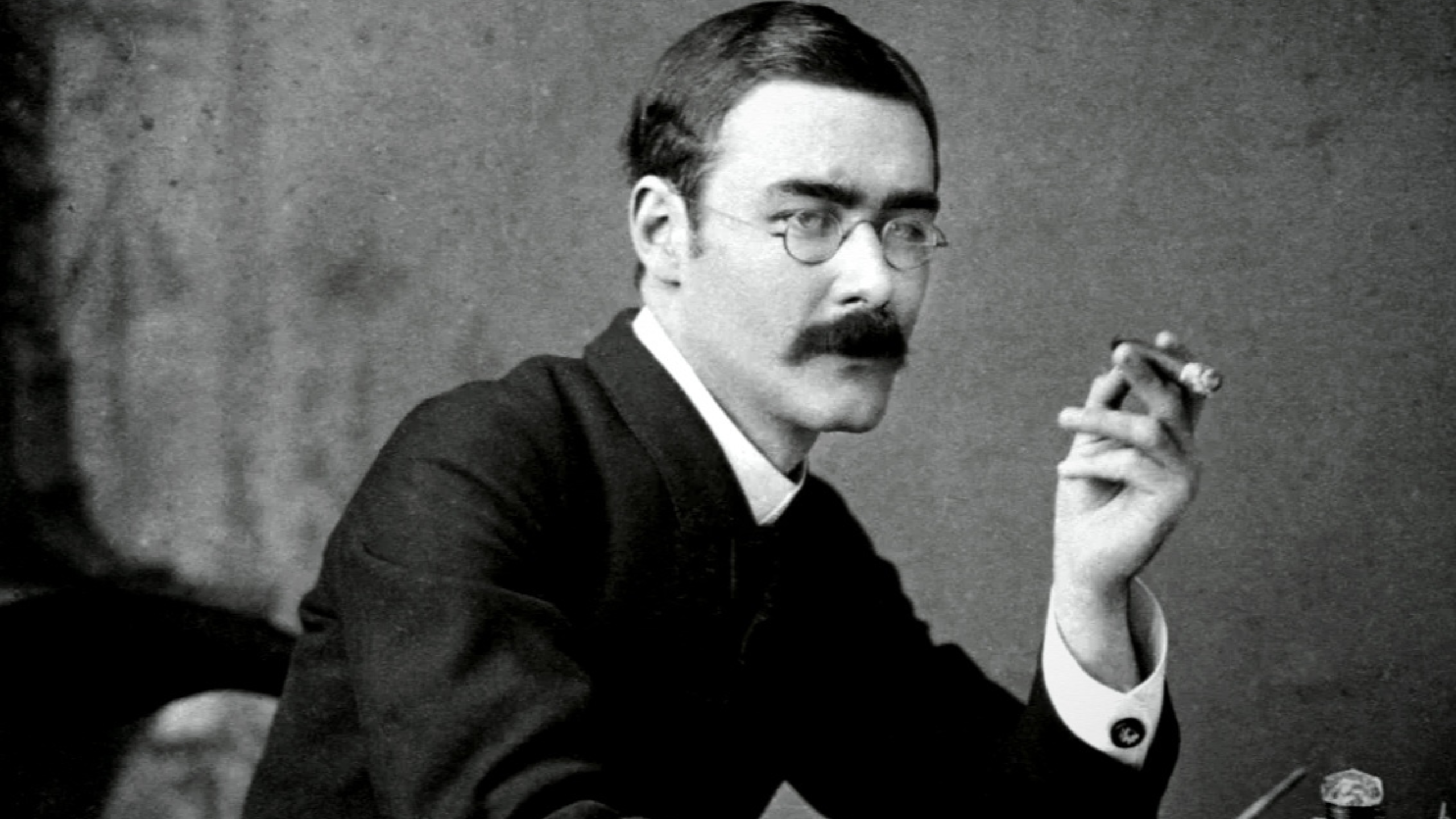
Durante su luna de miel a bordo del RMS Empress of India, Rudyard Kipling se dispone a leer el más reciente de sus poemas. Bajo un blanco cenital, envuelto en el humo del puro, el autor de veintisiete años deja que su imagen de faro nublado imponga el silencio sobre las mesas, que comienzan a oscurecerse como islas antes de una tormenta. Así, en el nocturno mar abierto, en travesía hacia Nueva York, se leyó por primera vez The Ballad of the «Bolivar»: una especie de saloma para ser cantada en tierra, entre brindis y botellas; la épica marina de siete hombres que sobreviven a una escabrosa tempestad a bordo de un viejo barco carbonero que, en condiciones deplorables y con una sobrecarga letal, zarpa desde los muelles de Sunderland, en el norte de Inglaterra, hacia el puerto de Bilbao, en el mar Cantábrico.
La línea
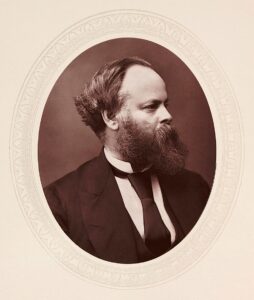 El trasfondo de aquel drama marítimo, eje del trabajo y el esfuerzo que Kipling narra en su balada, se remonta a 1875, año en que Samuel Plimsoll, un representante político de la ciudad de Derby, elevó las voces de un grupo de marineros indignados ante el Parlamento británico. Los marinos denunciaban en pancartas que, con el único propósito de cobrar el seguro de manera fraudulenta, las compañías navieras sobrecargaban viejos barcos y los enviaban alevosamente al mar, a costa de la vida de sus tripulantes.
.
.
.
En una línea de aliento
Para el año 1892, la ya popular Línea Plimsoll seguía siendo ignorada impunemente por las compañías navieras de Inglaterra. Ante la escandalosa negativa de la industria, el editor de St. James’s Gazette, el también abogado Sidney Low, emprendió junto a varios de sus colegas una entusiasta campaña mediática a favor de la legislación del aguerrido político. Una mañana —recuerda el mismo Low—, Kipling visitó la redacción de la Gazette y, después de halagar el combate periodístico del editor, le preguntó si deseaba publicar un poema sobre los tristemente célebres coffin ships. Detrás del humo de su pipa, Low asintió intentando contener su entusiasmo: “Give me some paper, something to smoke and something to drink and you shall have it”. Y, en poco menos de una hora, con un solo tiro de escritura, el poeta arrojó sobre el escritorio de Low el humeante borrador de su balada.
.
.
El otro «Bolívar»
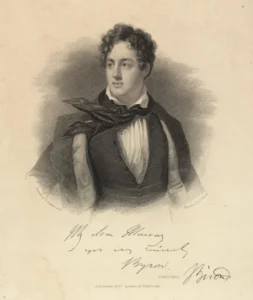 Es pública la admiración que Lord Byron profesaba por el Libertador. También se sabe que el autor londinense consideró alistarse en las filas patriotas durante la guerra de Independencia de Venezuela, y que una goleta suya llevaba rotulado en la proa el belicoso apellido Bolívar, en tributo a los ideales políticos del caraqueño; ideales que más tarde alentaron al poeta romántico a hundirse en su propia sangre en el conflicto independentista de Grecia. Y, aun cuando resulta audaz vincular el interés ideológico de un imperialista empedernido como Kipling con el exotismo libertario de Byron, no deja de ser curioso el guiño genealógico que el baladista imprime a su viejo collier. ¿O es mera casualidad que el puerto de destino del barco de la balada se encuentre precisamente en Bilbao, tierra vasca, comarca ancestral de los Bolívar?
El triunfo del «Bolívar»
.
.
K.
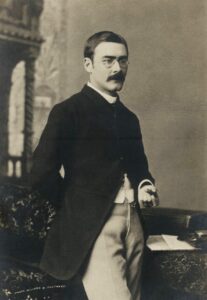
THE BALLAD OF THE “BOLIVAR“

.
.
SEVEN men from all the world, back to Docks again,
Rolling down the Ratcliffe Road drunk and raising
….Cain:
Give the girls another drink ‘fore we sign away—
We that took the «Bolivar» out across the Bay!
.
We put out from Sunderland loaded down with
………..rails;
We put back to Sunderland ’cause our cargo
………..shifted;
We put out from Sunderland—met the winter
………..gales—
Seven days and seven nights to the Start we
………..drifted,
.
……..Racketing her rivets loose, smoke-stack white
………..as snow,
All the coals adrift adeck, half the rails
………..below,
Leaking like a lobster-pot, steering like a
………..dray—
Out we took the Bolivar, out across the
………..Bay!
One by one the Lights came up, winked and let us
………..by;
Mile by mile we waddled on, coal and fo’c’sle
………..short;
Met a blow that laid us down, heard a bulkhead fly;
…Left the Wolf behind us with a two-foot list to
………..port.
.
Trailing like a wounded duck, working out
…her soul;
Clanging like a smithy-shop after every
…roll;
Just a funnel and a mast lurching through
…the spray—
So we threshed the Bolivar out across the
…Bay!
.
Felt her hog and felt her sag, betted when she’d
………..break;
Wondered every time she raced if she’d stand the
………..shock;
Heard the seas like drunken men pounding at her
………..strake;
Hoped the Lord ’ud keep his thumb on the
………..plummer-block.
.
Banged against the iron decks, bilges choked
…with coal;
Flayed and frozen foot and hand, sick of
…heart and soul;
‘Last we prayed she’d buck herself into
…Judgment Day—
Hi! we cursed the Bolivar knocking round
…the Bay!
.
Oh! her nose flung up to sky, groaning to be still—
…Up and down and back we went, never time for
………..breath;
Then the money paid at Lloyd’s caught her by the
………..heel,
And the stars ran round and round dancin’ at her
………..death.
.
Aching for an hour’s sleep, dozing off be
…tween;
Heard the rotten rivets draw when she took
…it green;
Watched the compass chase its tail like a cat
…at play—
That was on the Bolivar, south across the
…Bay.
.
Once we saw between the squalls, lyin’ head to
………..swell—
Mad with work and weariness, wishin’ they was
………..we—
Some damned Liner’s lights go by like a long hotel;
Cheered her from the Bolivar swampin’ in the
………..sea.
.
Then a grayback cleared us out, then the
…skipper laughed;
“Boys, the wheel has gone to Hell—rig the
…winches aft!
“Yoke the kicking rudder-head—get her
…under way!”
So we steered her, pulley-haul, out across the
…Bay!
.
Just a pack o’ rotten plates puttied up with tar,
…In we came, an’ time enough, ‘cross Bilbao Bar.
Overloaded, undermanned, meant to founder, we
…Euchred God Almighty’s storm, bluffed the
Eternal Sea!
.
Seven men from all the world, back to town again,
Rollin’ down the Ratcliffe Road drunk and raising
…Cain:
Seven men from out of Hell. Ain’t the owners gay,
’Cause we took the «Bolivar» safe across the Bay?
.
.
The Ballad of the «Bolivar»«, by Rudyard Kipling. From Rudyard Kipling Complete Verse, Anchor Books Doubleday, New York, © 1989, p. 134.
First published in the St. James’s Gazette of 29 January, 1892.

.
Víctor Manuel Pinto /
Valencia, Venezuela, 1982. Poeta, editor y profesor universitario. Jefe del Departamento de Artes Literarias de la Dirección Central de Cultura de la Universidad de Carabobo, donde dirige la revista POESIA e imparte talleres de escritura y teoría poética. Backmasking (2025), es su libro más reciente.